Whether you work in a restaurant, a catering kitchen or a canteen, a professional kitchen has to be laid out properly to keep food safe. That is what the forward-flow principle is for. Taught on every HACCP course, it raises hygiene standards in food service by organising the workflow and the layout so that soiled utensils and food never come into contact with fresh products or dishes ready to serve. So what exactly is forward flow? How does it relate to the HACCP method? And how do you apply it in a food business? This guide answers all three.
Forward flow: a definition
Forward flow in food service is a quality approach designed to prevent hygiene risks. It organises premises and work processes so that clean and contaminated products never meet, which rules out cross-contamination: the transfer of micro-organisms from contaminated food to safe food, which can happen during storage or preparation.
Forward flow and HACCP
European law, in particular Regulation (EC) No 852/2004, requires anyone running a professional kitchen in a food business to adopt a food safety management plan to prevent food-borne health risks. That plan includes the HACCP method, which identifies and controls potential hazards, whether chemical, biological or physical, through 7 principles and 12 steps of rigorous hazard analysis and appropriate responses. The forward-flow principle sits at the heart of the method. The regulation requires kitchens to be laid out and run in a way that makes maintenance and cleaning easy, and to keep “clean” and “dirty” areas clearly apart, for food and equipment alike. The aim is optimal hygiene and no contamination between raw and cooked food.
In practice, every stage, from receiving the ingredients to sending out the finished dishes, has to follow a clear order. You may not, for example, walk a dish through the washing-up area on its way to be served, and dirty crockery must never touch a surface where fresh food is prepared. Clean food, utensils and surfaces must be kept away from anything dirty. The aim is perfect hygiene at every stage, from the arrival of the ingredients to their storage after preparation, so that the people who eat the food are protected.
Need deliveries between your kitchens, shops or restaurants? Find a tailor-made same-day delivery solution by requesting a quote.
Forward flow in space and in time: what is the difference?
Forward flow in space
Forward flow in space means laying out the kitchen so that clean food never crosses the path of dirty food, keeping a constant one-way flow as dishes are prepared. It needs a specific layout and is easiest to apply when a kitchen is designed from scratch. Simple in theory, it can be hard to put into practice in an existing kitchen, because the whole space has to be rethought around the rule.
Forward flow in time
When space is too tight for traditional forward flow in space, as is often the case for small food producers, it can be applied in time instead. This approach depends not on the physical layout of the kitchen but on how tasks are organised.
With forward flow in time, activities involving food at different levels of cleanliness are separated by time rather than by space. The same worktop can be used for “clean” and “dirty” tasks, on one condition: it must be thoroughly cleaned and disinfected every time the activity changes.
For example, you can prepare vegetables on a worktop first and then, after a thorough clean, use the same surface to make a sauce. Operations have to be carried out one after another, so that two people never handle products at different stages of cleanliness in the same space at the same time. That discipline keeps hygiene and food safety standards in a professional kitchen and protects the food being prepared.
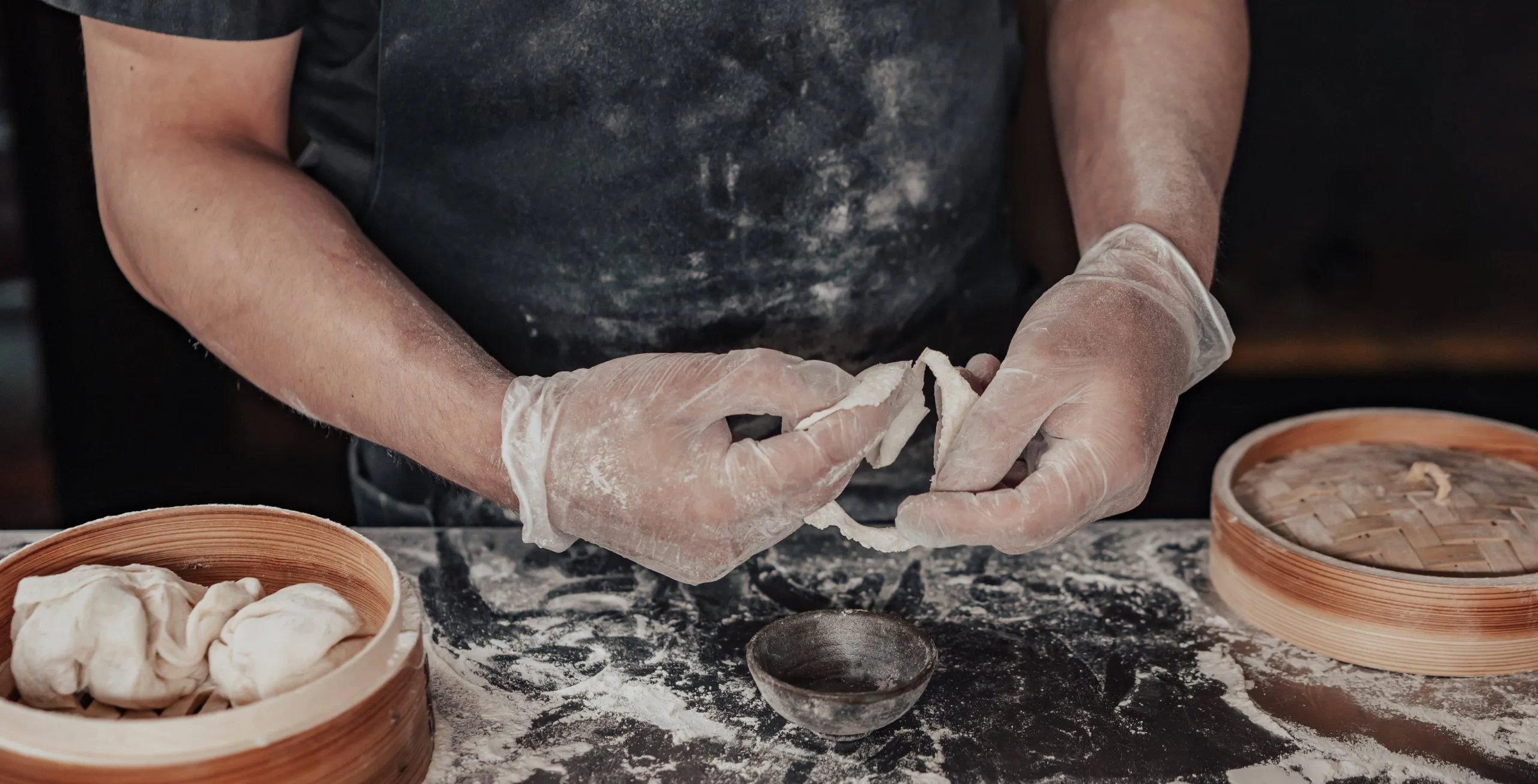
Applying forward flow in the kitchen
Forward flow organises staff and food efficiently to minimise the risk of contamination in a professional kitchen. It is essential across the whole food service sector and keeps every dish served safe.
Clean and contaminated areas
The clean area of a restaurant kitchen includes:
- Food preparation and washing areas, such as the cooking stations.
- Places where ready food is held temporarily.
- The pass, where dishes are plated before service.
The contaminated area of a professional kitchen, by contrast, covers:
- The delivery area for incoming supplies.
- Storage for unprocessed and dry goods.
- Areas where raw food is handled.
- The washing-up area for crockery and glassware.
- The waste area.
Keeping clean and dirty routes apart
To stop clean and dirty items crossing paths in the kitchen, follow these steps:
- Delivery area: products arrive at a dedicated point, where their outer packaging is removed and thrown away.
- Storage: keep products that need washing apart from those that are already clean. Store fruit and vegetables that need washing on one side of the kitchen, and on the other side products that are already clean or still in their packaging, such as butter, meat and other packaged animal products, including ready-made creams and sauces.
- Preparation area: food is processed here, whether cut or mixed. The area can be divided by type of activity. Once prepared, all food can be treated as clean.
- Cooking area: this is where the prepared food is cooked.
- Washing-up area: this area is for washing crockery and utensils. Because it is prone to contamination, it must be kept away from the preparation and cooking areas to prevent cross-contamination.
- Holding area: finished dishes are kept here until they are served or delivered.
- Dispatch: dishes are finally served at the table, handed to customers or sent out for delivery.